Audience
Architecture studio
An architecture studio wanted to compare oak, walnut, and limestone finish directions before committing the final visualization package.
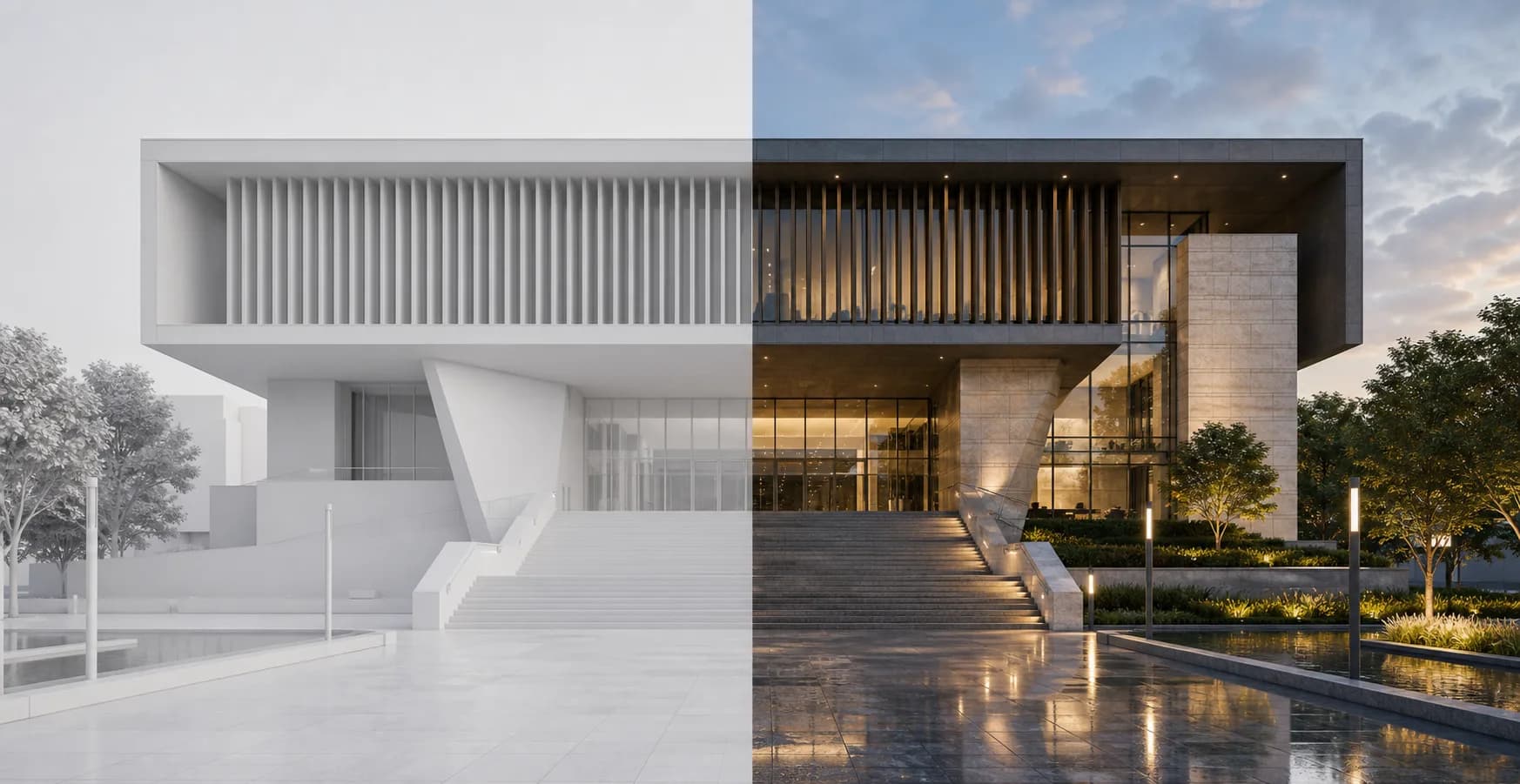
Base concept render
The base concept established the camera, composition, and lighting, but every finish option still required too much manual rework.
Challenge
What needed to change
Material studies were taking too long because each option required repeated manual adjustments and another render export.
Rendervi approach
How the image was upgraded
Rendervi generated controlled finish variations, preserved the camera composition, and kept the material changes consistent across surfaces and reflections.
- Material replacement
- Style direction exploration
- Consistent scene preservation
Alternative material route
Rendervi generated controlled finish changes such as oak, walnut, and limestone while keeping the same viewpoint and lighting conditions.
Outcome
What the team got back
The studio moved from one static concept to a faster client review workflow with multiple material directions ready for discussion.
Why it mattered
Why this workflow helps in practice
- Architects can test premium vs cost-sensitive finishes without reworking geometry.
- Material changes stay grounded in the original light and camera angle.
- Concept reviews become easier because stakeholders compare like-for-like frames.
Client review comparison
The client could compare like-for-like options instead of interpreting different renders, which made the review conversation much faster.