Audience
Interior design
A designer needed multiple styling directions for a client who was undecided between soft minimalism, boutique hospitality, and a darker editorial look.
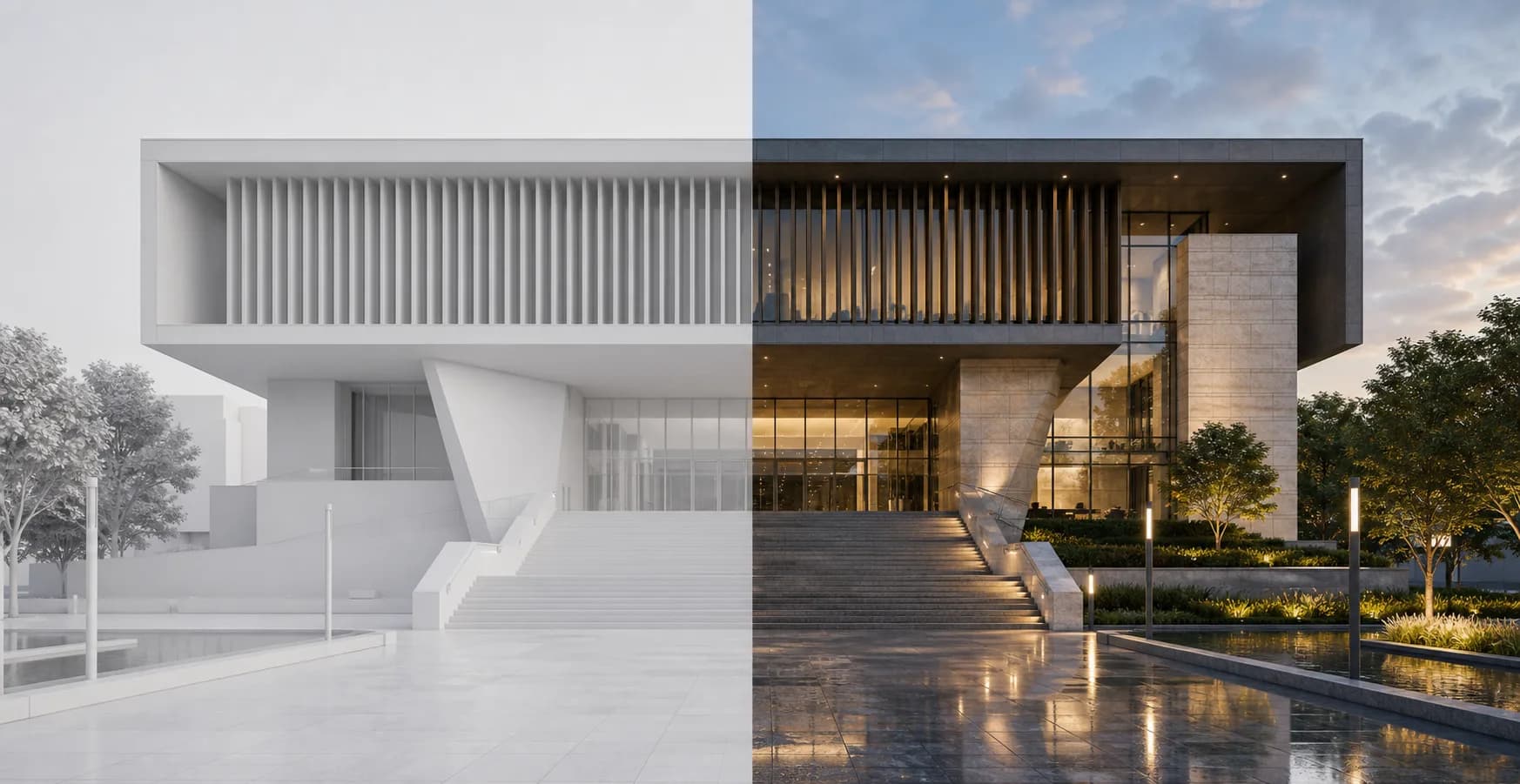
Approved base render
The approved render worked as a baseline, but the team needed several styling directions without starting a new render cycle each time.
Challenge
What needed to change
The client wanted options, but the design team did not want to restart the render process for every styling conversation.
Rendervi approach
How the image was upgraded
Rendervi generated direction-specific treatments, adjusted decor and materials, and improved the surrounding context so each concept felt intentional instead of random.
- Style exploration
- Decor and material refinement
- Surroundings enhancement
Alternative styling direction
Rendervi explored one clear styling route while keeping the approved spatial layout intact, so the client evaluated design taste instead of camera changes.
Outcome
What the team got back
The designer presented a clear decision set that accelerated approvals while protecting the original design intent.
Why it mattered
Why this workflow helps in practice
- Interior teams can show range without losing control of the concept.
- Each variation remains anchored to the approved spatial layout.
- Surrounding details lift the realism and storytelling of the scene.
Second approved concept route
A second concept route gave the client a confident decision set and helped the designer present real variation without losing control of the brief.